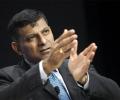
Former RBI governor Raghuram Rajan on Monday said the central bank will have to raise interest rates to tame inflation and the hikes need not be considered by politicians and bureaucrats as some "anti-national" activity. Known for his frank views, Rajan also said it was important to remember that the "war against inflation" is never over. "Inflation is up in India. At some point, the RBI will have to raise rates, like the rest of the world is doing," he said in a LinkedIn post.

The Reserve Bank on Friday projected retail inflation to be in 5-5.2 per cent range during the first half of the next fiscal year, expecting further softening of vegetables prices in near term. Also, it has lowered the retail inflation forecast for the current January-March quarter of 2020-21 fiscal at 5.2 per cent. The Reserve Bank (RBI) has kept the key policy rate unchanged at 4 per cent, with an accommodative stance, so as to ensure that inflation remains well within the target, Governor Shaktikanta Das said while announcing the last monetary policy of 2020-21.
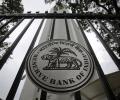
The non-food component in the price basket will continue to keep inflation at a high level and result in a "long pause" in interest rates, a foreign bank said on Wednesday. The central bank is likely to pare the pandemic-driven emergency response as well, the report by Singaporean lender DBS said. It can be noted that the high inflation driven by the food prices has forced the RBI to go for a status quo in rates for the three consecutive reviews of the bi-monthly policy meetings, even as growth continues to be in the negative territory.

India's prices are rising faster than many of its emerging market peers. The country's inflation print for May at 4.25 per cent is a marked reduction from the levels seen in May 2022 (7.04 per cent). However, even though the inflation rate remains within the Reserve Bank of India's medium-term target of 4 per cent, with a 2 per cent margin on either side, it continues to be higher than China, Russia, and Brazil.

'The actions of Indian monetary authorities will depend on how quickly they want the inflation to come down to 4 per cent.'

Trump has a major decision to take in coming days -- specifically, how to rescue Israel from the attritional war that lies ahead, points out Ambassador M K Bhadrakumar.

Retail inflation dropped to 6.77 per cent in October from 7.41 per cent in the preceding month, mainly due to easing prices in the food basket, though it remained above Reserve Bank's comfort level for the 10th month in a row, according to the government data released on Monday. The Consumer Price Index (CPI) based retail inflation has remained above the 6 per cent target since January this year.

'I think today RBI supervision is much sharper than what it was earlier.'

It pointed out that farm loan waivers, combined with a potential stimulus which the government is mulling now, can result in a 1 percentage point slippage in fiscal deficit
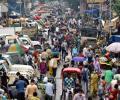
'We have lived through 10% plus inflation in India and we are aware of the economic pitfall.' 'With the RBI now having formally adopted an inflation target range, they cannot turn a blind eye to the impending risks.'

Welcome the rise in prices to the extent it is created by an increase in the purchasing power of the poor. The negative interest rates are supposed to be a disincentive for savings, thereby increasing demand.

Arguing that the recent elevation in retail inflation is not structural but supply-driven and therefore potentially transitory, a foreign brokerage report has forecast that the benign interest rate regime will continue at least until next June. The assessment comes a day ahead of the third bimonthly monetary policy review on Friday wherein it's widely expected that the monetary authority will leave the key rates unchanged at 4 per cent even though the consumer prices have been on remaining above 6 per cent since May and crude prices have been north of $70 a barrel for months.

'We have delivered a bitter medicine. It will take time to work.'
The government has invited applications for the post of deputy governor of the Reserve Bank of India (RBI) from interested candidates with at least 25 years of experience and below 60 years of age as on January 15, 2025. One of the deputy governors, Michael Patra's current term will end on 15 January. The last date of submission of applications is November 30, 2024.
At a time when inflation is hovering around 6 per cent, Reserve Bank on Friday said that a 5 per cent inflation this year is "certainly possible" and that India is likely to be "less affected" by global imbalances.

Ask rediffGURU and PF expert Nitin Narkhede your mutual fund and personal finance-related questions.

The stock of India's largest listed pure-play retail company, Avenue Supermarts (DMart), has slipped over 10 per cent from its monthly highs. A weak operational performance in the fourth quarter (January-March) of financial year 2024-25 (Q4FY25) and muted near-term outlook due to intense competitive pressures and higher costs could lead to downward momentum on the stock. While the stock dipped by 3.44 per cent in early trade on Monday, it recovered a bit to close 1.07 per cent lower at 4,017.

Leader of Opposition in Lok Sabha Rahul Gandhi on Saturday alleged that the 2024 Maharashtra assembly elections were a 'blueprint for rigging democracy' and this 'match-fixing' would next happen in Bihar and 'anywhere the Bharatiya Janata Party is losing'.
'We will be very, very proactive in providing whatever liquidity requirements are needed.'

People with modest incomes can also build a crore-worthy portfolio by investing small amounts consistently, says Ramalingam Kalirajan, and shows how the magic of compounding works.
Wholesale price-based inflation rate fell to a 3-year low of (-) 3.48 per cent in May on easing prices of food, fuel and manufactured items, strengthening the case for continuing with the pause in rate hike in the coming months of the current fiscal. This is the second straight month when WPI has been in the negative zone mainly on account of a higher base and falling prices of fuel and manufactured goods. Food prices also eased during May. In May, 2022 WPI inflation was at 16.63 per cent. Last month, it was (-) 0.92 per cent.

In a significant policy announcement from the Oval Office, President Donald Trump has declared a 25 per cent tariff on all imported vehicles entering the United States, a move he described as "very exciting" for domestic manufacturing. The tariffs, set to take effect on April 2, will impact nearly half of all vehicles sold in the United States, including American brands assembled overseas.

After consumer price index jumped the 6.3-per cent mark in May and wholesale inflation set a record of 12.94 per cent, house economists at Swiss brokerage UBS Securities have warned that the country is facing more upside risks on the inflation front that is set to averaging at 5 per cent for the year. Rising prices of edible oils and protein rich items pushed retail inflation to a six-month high of 6.3 per cent in May, breaching the comfort level of the Reserve Bank and thus rendering reduction in interest rates a difficult proposition in the near term. Led by petrol price, that has crossed the Rs 100-mark in many states, wholesale inflation too accelerated to a record 12.94 per cent in May. While crude oil has crossed $70 a barrel on account of rising prices of crude oil and manufactured goods due to spike in commodities, and the low base of last year due to the lockdown.

That panic has set in among policy makers is suggestive of the worst being over in global inflation.

The Index of Industrial Production (IIP) grew by 1.4 per cent in November as most components like manufacturing, electricity, mining, primary goods, and consumer durables witnessed a slowdown, according to data released by the National Statistical Office (NSO) on Wednesday. This is on the base of a decline of 1.7 per cent in November 2020 and before the new Covid variant started impacting economic activity. IIP growth was lower than the 4 per cent expansion recorded in the previous month but was better than a 1.6 per cent contraction seen in November 2020. Separately, rising prices of kitchen staples pushed retail inflation, or rate of price increase, to 5.59 per cent in December 2021, bringing it close to the upper band of Reserve Bank's comfort zone.

Geopolitical tensions, trade policy uncertainties, volatility in international commodity prices and financial market uncertainties pose considerable risks to India's economic growth in the coming year, the finance ministry cautioned on Wednesday. "Global trade continues to be affected by uncertainty in the policy environment... tariff-related developments in multiple countries have heightened trade-related risks, affecting investment and trade flows globally.

Gita Gopinath, Professor of Economics at Harvard University, says the monetary policy in India is not transparent and it would be nice to know very clearly from the central bank what steps it has to control inflation and what impact the rate hikes had on controlling inflation.

The Indian economy is expected to be "a little weaker" in 2025 despite steady global growth, IMF managing director Kristalina Georgieva has said. Georgieva also said she expects quite a lot of uncertainty in the world this year mainly around the trade policy of the US. In her annual media roundtable with a group of reporters on Friday, she said global growth is expected to be steady in 2025, but with regional divergence.
'We never waste a crisis. There will be learning and the supervisory tools will get better with each episode.'

DBS called Rajan's decision not to seek an extension as a 'negative surprise'.

Reserve Bank of India (RBI) is unlikely to cut the benchmark interest rate at its upcoming monetary policy review meeting, taking place soon after the announcement of the Lok Sabha election results, amid inflation challenges, said experts. The Monetary Policy Committee (MPC) may also refrain from rate cut as economic growth is picking up, notwithstanding the elevated interest rate of 6.5 per cent (repo) prevailing since February 2023. The meeting of the Reserve Bank Governor Shaktikanta Das headed MPC is scheduled for June 5 to 7.

Led by a sharper-than-expected deceleration in industrial activity, economic growth in India slowed more than anticipated and is projected to remain at 6.5 per cent till 2026, the International Monetary Fund said on Friday. "Growth in India slowed more than expected, led by a sharper-than-expected deceleration in industrial activity," the IMF said in its latest update of the World Economic Outlook, according to which the global economy is holding steady. In 2023, India's growth rate was 8.2 per cent, which dropped to 6.5 per cent in 2024.

'Challenge is basically near-term growth as the outlook has turned a bit adverse.'

The Reserve Bank of India (RBI) is expected to cut interest rates for the first time in nearly five years in Governor Sanjay Malhotra's first monetary policy committee (MPC) meeting on Wednesday. The meeting of the six-member MPC, which will culminate on Friday, aims to boost sluggish economic growth, which is seen falling to a four-year low. Malhotra took charge as the 26th RBI governor in December last year.

Godrej Consumer Products (GCPL) had a disappointing third quarter (Q3FY25) with flat volumes (after 7 per cent growth H1FY25). Price hikes will be required to maintain margins to offset the cost of palm oil inflation. However, some analysts see Q3 as an exception with strong volume growth expected to resume and it may be the fastest growing FMCG player in FY26.

The government is confident of meeting the fiscal deficit target of 5.9 per cent of gross domestic product (GDP) and the nominal GDP target of 10.5 per cent despite pressure in the initial months of FY24, Economic Affairs secretary Ajay Seth told Business Standard. Normally the initial months of any financial year see proportionally a higher fiscal deficit because the expenditure is evenly paced while revenue picks up in the later months, he said. "This year the proportional fiscal deficit so far is much closer to the target than in most other years.

India's headline retail inflation is expected to moderate further in the months to come, as low wholesale inflation will transmit to consumer prices, the Ministry of Finance said in its latest monthly economic review (MER) on Monday. "Inflationary pressures eased in February, with slight moderation in Consumer Price Index (CPI) inflation and Wholesale Price Index (WPI) inflation softening to a 25-month low. "With WPI inflation easing, its transmission to CPI inflation is soon expected," the MER for February said.

RBI Governor Raghuram Rajan on Tuesday kept the repo rate unchanged 6.50 per cent.

The Indian economy is recovering from the slowdown in momentum witnessed in the September quarter, driven by strong festival activity and a sustained upswing in rural demand, according to a Reserve Bank of India (RBI) bulletin released on Tuesday. An article on the 'State of the Economy' in the December bulletin noted that the global economy continues to exhibit resilience with steady growth and moderating inflation.
NRI industrialist Lord Swraj Paul on Wednesday said that the Indian government should first target containing inflation rather than focus on growth. Lord Paul said that it is necessary that India should focus more on containing runaway inflation witnessed at the moment, which hit the poor people hard. Referring to the recent acquisitions made by the Tatas in UK, he said that UK was delighted to welcome the Tatas there. Relationship between India and UK was at its peak now.
